Kelp carbon cycling & sequestration

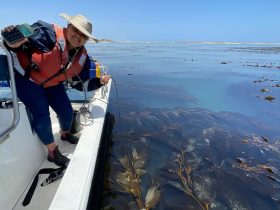
Kelp forests and seaweed farms store carbon differently from other blue carbon ecosystems. As kelp stores carbon in its biomass through photosynthesis, some of its biomass is naturally exported into the ocean, where a fraction can settle in nearby sediments or be transported to long-term deep ocean reservoirs. 

Despite covering a quarter of the world’s coastlines and growing fast, kelp ecosystems remain underrepresented in blue carbon and carbon dioxide removal frameworks. At the Kelp Forest Foundation, we drive research in kelp’s role in carbon cycling and CO₂ sequestration, close key scientific gaps, and help develop the evidence base and methodologies needed to assess its climate potential responsibly. 

Why study kelp and CO₂ sequestration?

Kelp forests are among the most productive ecosystems on Earth, growing rapidly while supporting biodiversity, nutrient cycling, and coastal food webs. Because kelp takes up large amounts of CO₂ from its surrounding waters, its potential role in ocean carbon cycling and CO₂ sequestration has attracted growing scientific interest.

Yet kelp remains underrepresented in blue carbon research and climate frameworks. Unlike soil- or sediment-based ecosystems (such as trees, mangroves, seagrass), kelp carbon is mostly exported into the ocean rather than stored directly beneath the forest, making it harder to measure and verify, and leaving key scientific questions unresolved.

This page introduces how kelp carbon cycling works, what the science currently shows about long-term CO₂ sequestration, and how the Kelp Forest Foundation is helping to close the remaining evidence gaps.

Explore the science behind kelp carbon sequestration

The articles below explore why studying kelp carbon cycling and sequestration matters, how it works, and how the science is being advanced.

The case for kelp carbon

Why kelp forests are largely missing from blue carbon and carbon dioxide removal frameworks, what recent research shows about kelp CO₂ sequestration, and why this overlooked ecosystem matters.

How kelp sequesters carbon

paula

An explainer of kelp carbon cycling, including sequestration pathways, permanence, and why kelp CO₂ sequestration depends on ocean transport.

Advancing kelp carbon science

Image (9)

How Kelp Forest Foundation supports kelp CO₂ sequestration research through oceanographic modelling, sediment studies, methodology development, and emerging molecular tools.

Interested in our kelp research?

Help us restore the health of our planet. If you have a research project idea that is related to one of our research areas, we’d love to work with you!